
Food Hall Market Grows 26% While Hospitality Contracts
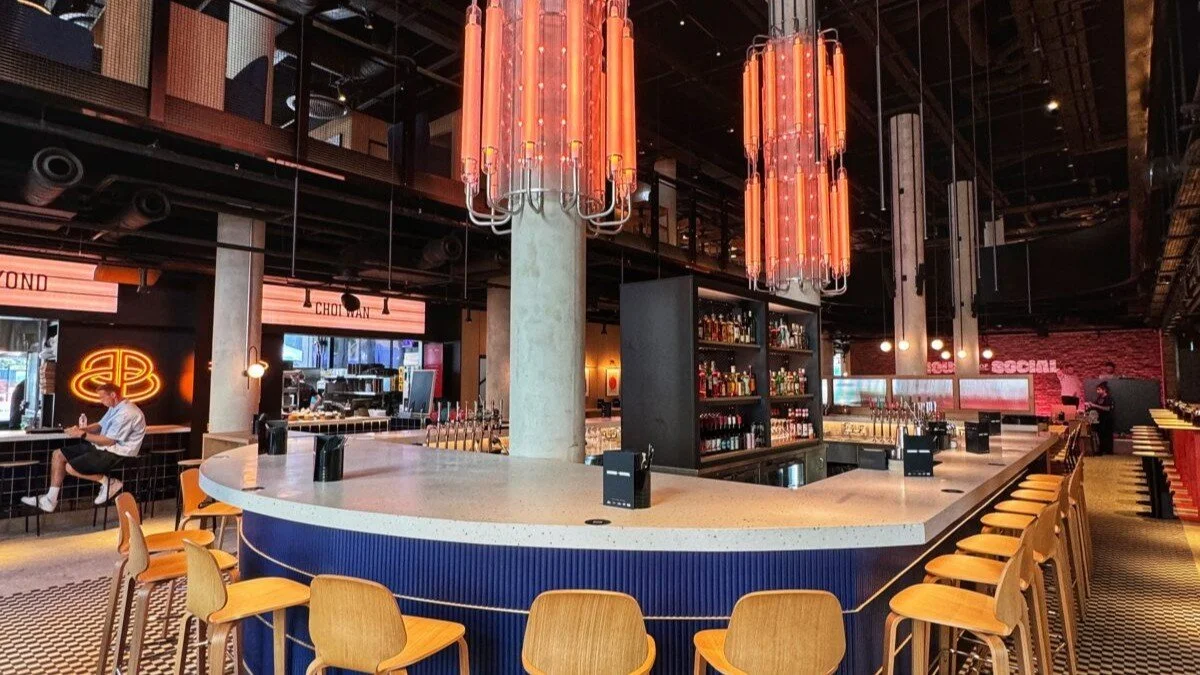
Despite the intense pressures facing the wider hospitality sector, the UK’s food hall industry continues to grow at pace.
As of September 2025, there are 94 food halls operating across the UK, up from 73 last year, a 26% year-on-year increase. Across all multi-vendor operations (MVOs), the total now stands at 139, up from 114 in 2024, a rise of 22%. A further 58 sites are currently in development, compared with 52 last year.
This growth has come during one of the most turbulent periods for hospitality in living memory. Rising energy costs, wage inflation and an unsustainable tax burden have forced thousands of restaurants, pubs and bars to close. Yet food halls, once dismissed as a fad, have not only held their ground but continued to expand.
In fact, only one food hall has closed in the past year, Department in Sheffield (formerly Kommune). When set against the hundreds of restaurant and pub closures every month, that represents a remarkable level of resilience.
The Second Wave of Food Halls
We are now firmly in the second wave of the food hall movement, one defined less by novelty and more by maturity.
Operators and developers are sharper, more data-led and increasingly disciplined about what makes a food hall succeed. The model is evolving with varying footprint sizes, stronger curation, mixed-use integration, and a shift from big-city flagships to regional and regeneration-led schemes.
Food halls have moved from being “nice-to-have” lifestyle venues to essential anchors in urban regeneration, driving footfall, activating underused assets, and generating both social and economic value.
Why Food Halls Work
While traditional restaurants and bars struggle to adapt to shifting consumer habits, food halls align perfectly with how people now socialise, eat and spend.
Flexibility – Vendors can rotate, test and adapt without huge capital investment.
Community – Shared, inclusive spaces that cut across generations and demographics.
Experience – Part meal, part event, part social hub.
Efficiency – Shared infrastructure lowers costs and spreads risk.
Resilience – Turnover-based rents align incentives and reward performance.
Food halls have also filled the cultural gap left by the decline of nightclubs, live music venues and late-night hospitality. They have become modern civic spaces, the new public squares, where people gather for food, music, art and events in environments that are safe, lively and inclusive.
Regional Growth and Regeneration
What’s particularly exciting is where this growth is happening. The first wave centred on London and major cities like Manchester, Liverpool and Sheffield. The next is regional, regeneration-led and locally grounded.
We’re now seeing food halls embedded in mixed-use masterplans, heritage conversions and town-centre renewal projects. Developers are using hospitality as a regeneration tool, not an afterthought, recognising its ability to deliver both commercial viability and social value.
Food halls bring lights on, people in, and life back to spaces that might otherwise stay empty. For local authorities, they offer a practical, visible form of levelling up, small-scale investment with large-scale impact.
The Market Reality Check
This success doesn’t make the sector immune to wider economic pressures. Build and fit-out costs remain 20 to 30 percent higher than before the pandemic, and operator margins are tight. Discretionary spend is still stretched, but demand remains steady.
Still, only one closure in 12 months is proof that the model is among the most adaptable and durable in modern hospitality.
The Road Ahead
The next year will see a continued regional shift, with new openings in smaller cities and market towns, greater collaboration between developers, councils and operators, and more hybrid venues that blend food, culture and community.
The message from this year’s data is clear: food halls are no longer the disruptors, they are the infrastructure.
In an era when much of UK hospitality continues to contract, food halls remain one of the few genuine growth stories.
And while government announcements about “supporting hospitality” tend to focus on headlines like extended opening hours, the real lesson is simple: when hospitality is given the right conditions, flexibility, creativity and partnership, it thrives.
These numbers don’t just show growth. They show potential if we are willing to treat this sector not as a novelty, but as a vital part of the UK’s social and economic fabric.
Contact us to find out more about the food hall industry.