
The Mayor of London’s Proposed Licensing Changes
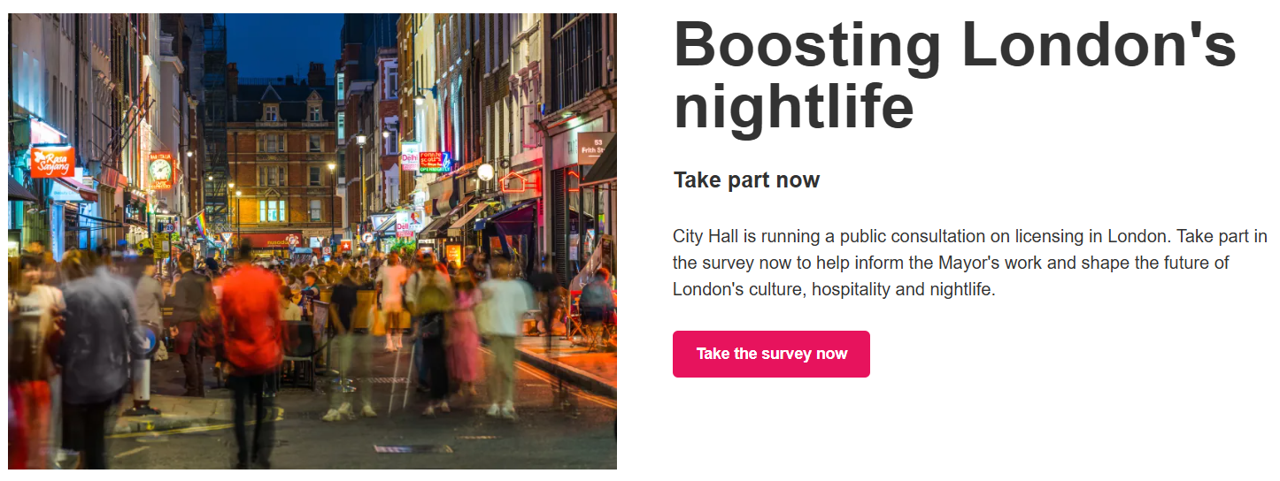
The Mayor of London is redesigning the entire licensing system. We might have had my head in the sand, but we’re pretty sure most of the industry has no idea it's happening.
The Mayor's plans will reshape how every pub, bar, restaurant, nightclub, event space and cultural venue in London operates. We only found out through an Instagram ad.
On the whole, it looks positive for the industry. But there are some significant caveats, particularly around vague terms like 'strategically important', and we need a loud voice in this conversation. Nearly 2,000 people have already completed the survey. If those are mostly complainers, NIMBYs and grievance-holders, that matters. A lot.
WHAT IT IS
The Draft London Strategic Licensing Policy 2026-31 gives the Mayor a formal strategic role in London's licensing system for the first time. It sets principles that all 33 London boroughs must follow when making licensing decisions. A pilot launches Summer 2026.
WHAT'S GENUINELY ENCOURAGING
There's a lot here that the industry has been asking for:
→ An explicit pushback on blanket conditions and rigid core hours policies, with every case decided on its merits
→ Recognition that SMEs and grassroots operators are disproportionately burdened by the current system
→ Support for flexible, multi-purpose business models
→ The Agent of Change principle is backed, meaning new residential developments near venues take responsibility for noise mitigation, not the venue
→ Unnecessary and duplicated conditions (excessive CCTV demands, blanket door supervision requirements) called out directly
→ Meanwhile, uses and pavement licensing are treated as mainstream, not exceptions
→ Pre-application engagement encouraged to avoid costly hearings
WHAT NEEDS WATCHING
The Mayor gains a new call-in power. After a borough grants a licence, the Mayor can step in and redetermine it if deemed 'strategically important.' The GLA also becomes a responsible authority, meaning it can formally object to applications. The criteria for both are broad.
These powers are framed as proportionate backstops. Whether they stay that way depends entirely on how they're used, and that depends on who shapes this consultation.
WHY YOUR VOICE MATTERS RIGHT NOW
Consultations like this attract objectors by default: residents with noise complaints, anti-nightlife campaigners, people with axes to grind. Unless operators, venue owners, event promoters and night-time economy workers actively participate, the responses will skew against us.
This policy could make London's licensing system genuinely fairer, faster and more growth-friendly. Or it could add another layer of expensive complexity. That outcome depends on who shows up.
The consultation is live. Please read it, fill out the survey, and share it with anyone who works in or cares about London's hospitality, nightlife and events industry. It takes 10 minutes.
Read Restaurant Magazine’s article here: https://www.restaurantonline.co.uk/Article/2026/03/20/industry-encouraged-to-give-feedback-on-the-mayors-draft-london-strategic-licensing-policy/