
Stranded Assets Part Three: What Actually Makes a Stranded Asset Viable Again?
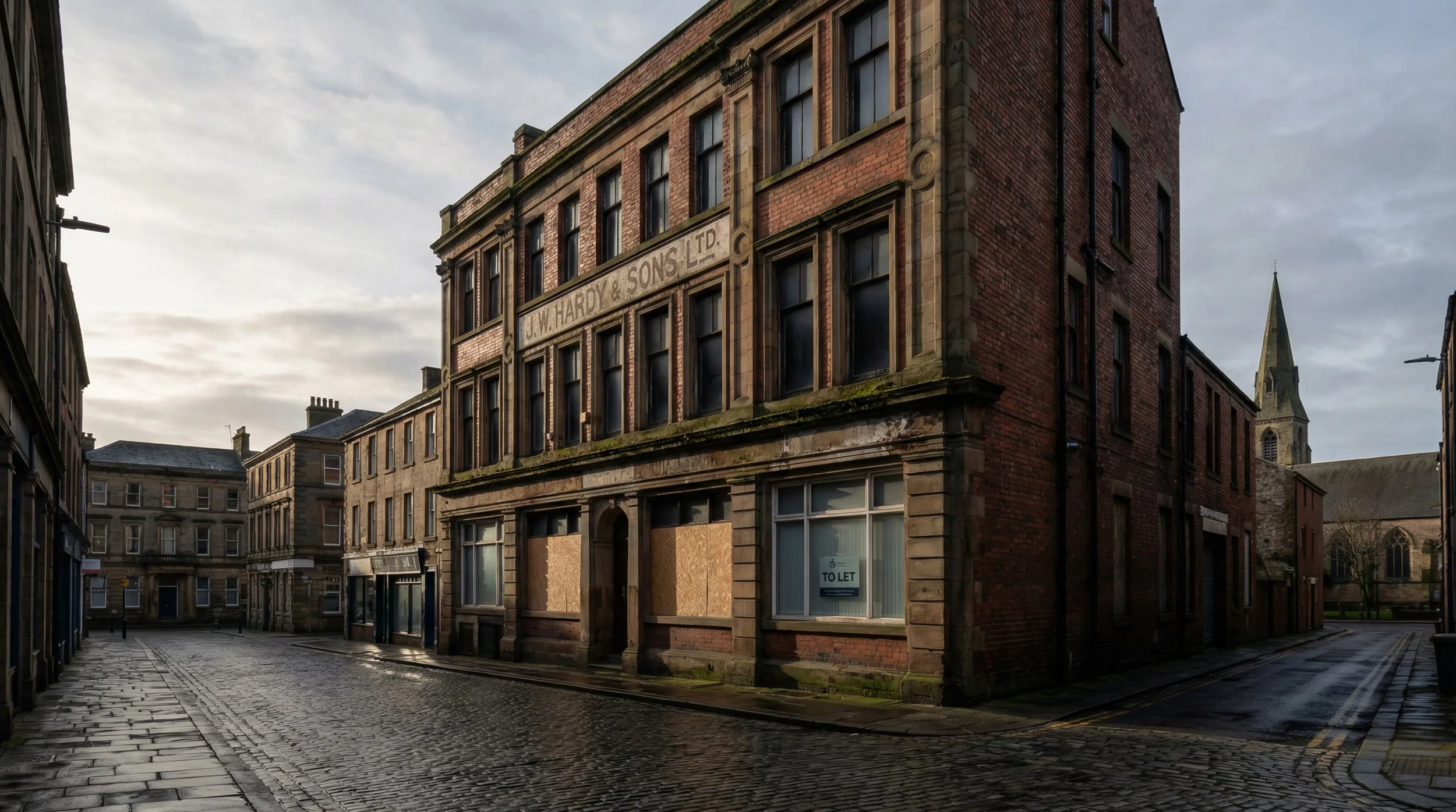
Stranded assets can become exciting elements of a town centre once again
Moving from wishful thinking to evidence-led concepts
It is easy to look at a stranded building and imagine what it could become. A community hub. A food hall. A creative workspace. Co-working. A boutique hotel. The ideas come quickly, often fuelled by examples from other places that seem to have cracked the problem.
But ideas are not the hard part. The hard part is knowing whether an idea will actually work - in this building, in this location, for this community, at this cost.
Most stranded assets have no shortage of vision. What they lack is the evidence to support it.
The gap between concept and credibility
When councils or landlords approach us, they often arrive with a concept already in mind. Sometimes it is a strong instinct. Sometimes it is a stakeholder's suggestion, a political priority, or something a neighbouring authority has done. Occasionally, it is simply the last idea that stuck.
The problem is not usually the idea itself. It is the idea that has not been tested. And untested ideas are challenging to fund, difficult to defend, and prone to unravelling once detailed design begins.
A credible concept is one that can answer complex questions. Who will use this? How often? What will they pay - or what subsidy is required? Who operates it, and how do they sustain themselves beyond the first few years? What happens if demand falls short?
These are not questions to address once funding is secured. They are the questions that determine whether funding should be secured at all.
What we mean by testing demand
Demand testing is often misunderstood. It does not mean just running a public survey and reporting that people like the idea of a cinema or a market. Of course they do. That can tell you very little without the complete data set.
Genuine demand testing asks more complex questions. Is there a gap in provision, or would a new facility simply compete with an existing facility nearby? Are the people expressing interest the same people who would actually use it, regularly, at a price point that works? What does comparable provision elsewhere tell us about likely footfall, spend, and seasonal variation?
This means looking at catchments, at competitor facilities, at demographic and spending patterns. It means speaking to potential operators and tenants early, not to sell them a vision, but to understand what they would need to make it work. It means being honest when the numbers do not stack up - and exploring what would need to change for them to do so.
A concept grounded in this kind of evidence is far harder to dismiss. It also avoids the painful moment, often years into a project, when assumptions that were never examined finally collide with reality.
Viability is not just about cost
There is a tendency to treat viability as a question of capital funding. Can we afford to refurbish the building? Can we secure enough grants to bridge the gap?
But capital is only part of the picture. A building can be beautifully restored and still fail within five years if no one has properly considered how it will operate. Revenue viability - the ability to cover running costs, maintenance, and eventual reinvestment - is where many projects come unstuck.
This is especially true for assets that will serve a mixed purpose: part commercial, part community, part public sector. The balance between income-generating uses and subsidised space must be carefully struck. Get it wrong, and either the commercial tenants cannot survive, or the community offer becomes unsustainable.
We model these dynamics before anyone commits to a direction. What mix of uses generates enough income? What level of subsidy is realistic over the long term? What happens if a key tenant leaves? The answers shape not only the concept but the physical design that follows.
Why early clarity matters
There is a reason funders consistently favour projects that demonstrate need and operational thinking. It is not bureaucratic box-ticking. It is because projects without this groundwork are prone to stalling, overrunning, or delivering buildings that never quite find their purpose.
Doing this work early also protects councils from a common trap: commissioning architectural designs for a concept that has not been validated. Design work is expensive. It also creates momentum that can be difficult to reverse. Once a scheme has been drawn, changing the underlying concept means revisiting everything.
Starting with the commercial and operational logic before the architects arrive means the brief they eventually receive is grounded in reality. It reduces abortive work. It strengthens funding applications. And it gives everyone involved, from officers to members to community stakeholders, confidence that the direction is sound.
The questions we help answer
When we work with councils and landowners on stranded assets, our focus is on building the evidence base that turns an idea into a defensible proposition. That typically means:
Identifying a realistic range of future uses, from the familiar to the more creative
Testing demand through data, comparable analysis, and early operator engagement
Modelling income, costs, and subsidy requirements across different scenarios
Exploring who could operate the building and on what terms
Stress-testing assumptions so weaknesses surface early, not late
The output is not a report that sits on a shelf. It is the foundation for everything that follows: funding bids, design briefs, operator procurement, and long-term business planning.
From wishful thinking to a project that works
Stranded assets rarely fail because the vision was wrong. They fail because the vision was never adequately defined. The buildings that succeed are those where someone took the time to ask difficult questions early and to build a concept that could survive contact with reality.
That is where we start. But we can also help with what comes next: assembling the right design team, supporting funding bids, advising on ownership and operational structures, and reviewing designs to ensure they actually work in practice. Too many projects reach detailed design without anyone asking where the bins go, whether the café has enough covers to break even, how deliveries will work on a market day, and let's not forget projects where the conceptualised feature bar is downgraded to a bottle bar because no one thought to include enough cellar space. These are the details that determine whether a building thrives or quietly struggles from day one.
If you are developing plans for a stranded asset - whether you need to test a concept, build a funding case, or sense-check a scheme already in progress - we would welcome a conversation.