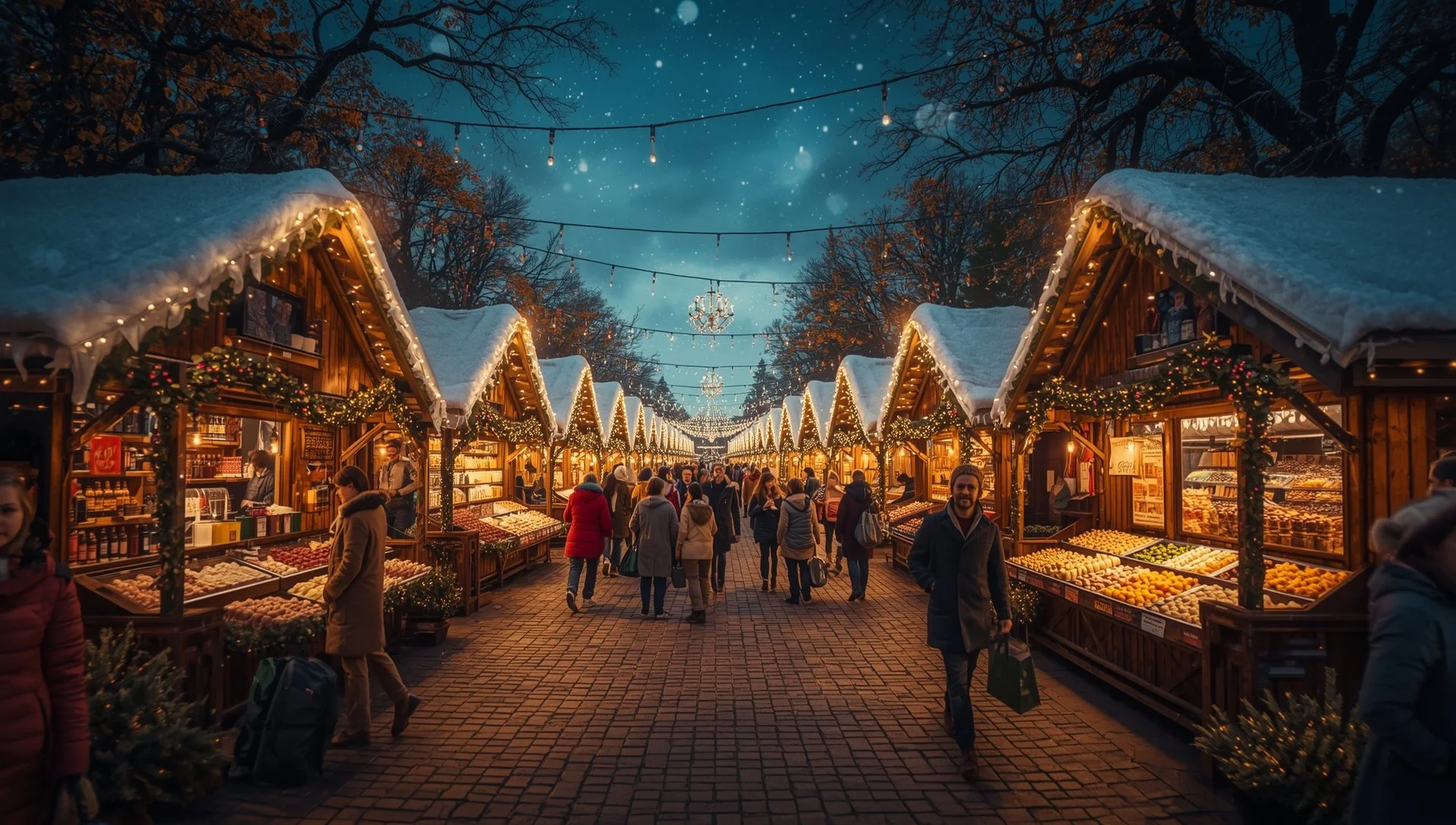
Behind the Baubles: The Real Work of Christmas Markets
When people picture a Christmas market, they think of wooden chalets, fairy lights, mulled wine and happy shoppers. What they don’t picture is the spreadsheet of road closures, the endless risk assessments, or the frantic hunt for one last trader who can do weekends two and three.
Christmas Markets look magical. They’re also the kind of project that can age you a year in a month. Anyone who’s organised one knows that Christmas markets aren’t all festive cheer. They’re hard work, strategically, logistically and politically.
At Christmas, every town and city in the country is competing for the same pool of traders. Choosing the right date is critical. Go too early and the mood (and stock) isn’t ready; too late and your traders are already booked elsewhere. Your offer needs to be distinctive enough to attract good traders and realistic enough that they’ll actually do well. Your biggest competitive edge is curation. People won’t brave December weather for stalls they could scroll past online.
Then there’s the balancing act with your regular market traders, the people who stand there all year in the cold and feel understandably frustrated when the “fancy Christmas market” gets the budget, the bunting and the press coverage. Add in town centre businesses watching nervously for competing stalls near their doors, and suddenly your “feel-good community event” is a delicate diplomatic operation. Handle it well, and your regular traders feel respected instead of sidelined.
Even the big decisions are double-edged. Do you link your market with the Christmas light switch-on and capture footfall, or risk a night of candyfloss, plastic wands and zero retail sales? Anyone who’s spent that evening shooing off pedlars (or demanding ground rent) knows it’s not as simple as it looks.
But when it comes together, it’s worth it. What people value most isn’t the stalls. It’s the feeling of the town coming alive together. The smell of food, the sound of carols, the sense of community - that’s what people remember. Not to mention the increased town centre footfall, enhanced pride in place and supplementary spend in neighbouring shops.
If you’re already thinking ahead to next year’s Christmas market, now’s the time to start planning. It’ll be too late by next autumn. Next year’s successful Christmas market starts with decisions made now, not when the leaves turn.
And if you need some help thinking about how to make it work for your town - get in touch with us here at Next Phase.