Stranded Assets Part One: The Buildings Holding Town Centres Back
And why defining their future is now a strategic priority
Every town has buildings that have slipped into limbo. Former civic buildings, such as town halls, outdated commercial blocks, heritage structures without purpose, and market halls that no longer trade effectively. These stranded assets sit in the most visible parts of town, yet they resist easy answers.
They are too costly to maintain, but often too prominent to ignore. And while they wait for a solution, they quietly undermine wider regeneration efforts. A decaying landmark in the wrong location sends a message about a place's direction. It weakens investor confidence. It frustrates residents. Doing nothing is not a neutral act.
How buildings become stranded
The pattern is familiar. A building becomes outdated or inefficient. Compliance costs climb. Ownership changes hands, or motivations shift. Modern uses prove difficult to retrofit without significant rethinking. Eventually, the asset becomes stuck, and year by year the feasibility gap widens.
This is not only a heritage issue. Listed buildings face particular constraints, but stranded assets also include 1970s civic centres, redundant office blocks, former retail units with awkward layouts, and municipal buildings designed for a world that no longer exists. The common thread is not age. It is purpose - or the lack of it.
What starts as an operational headache ends up shaping how people see the entire place.
A window of opportunity
Local authorities are now under growing pressure to act. Vacancy rates remain stubbornly high, with more than one in eight high street premises standing empty nationally - and significantly higher in some towns. At the same time, new funding is arriving.
The Pride in Place Programme is directing up to £20 million to each of 75 communities over the next decade, with Regeneration Plans due by the end of November. A further 169 areas will follow. Meanwhile, the Heritage Revival Fund and Heritage at Risk Capital Fund are opening new routes for rescuing and repurposing neglected buildings. And the direction of travel on devolution is creating further opportunities: £13 billion in flexible funding is being devolved to seven mayoral combined authorities through integrated settlements covering housing, regeneration, local growth and infrastructure. More than 30 budget streams from across Whitehall are being consolidated, giving mayors greater discretion over how funds are used - and this model is expected to extend to more areas. For councils and combined authorities preparing their pipelines, the question is how proactive planning can position their projects and communities to benefit from myriad funding opportunities that may arise.
For councils preparing bids or developing their regeneration strategies, this is the moment to turn stranded assets from liabilities into opportunities. But funding alone does not unlock a building. What unlocks it is clarity: a defined purpose, a tested concept, and a credible route to long-term operation.
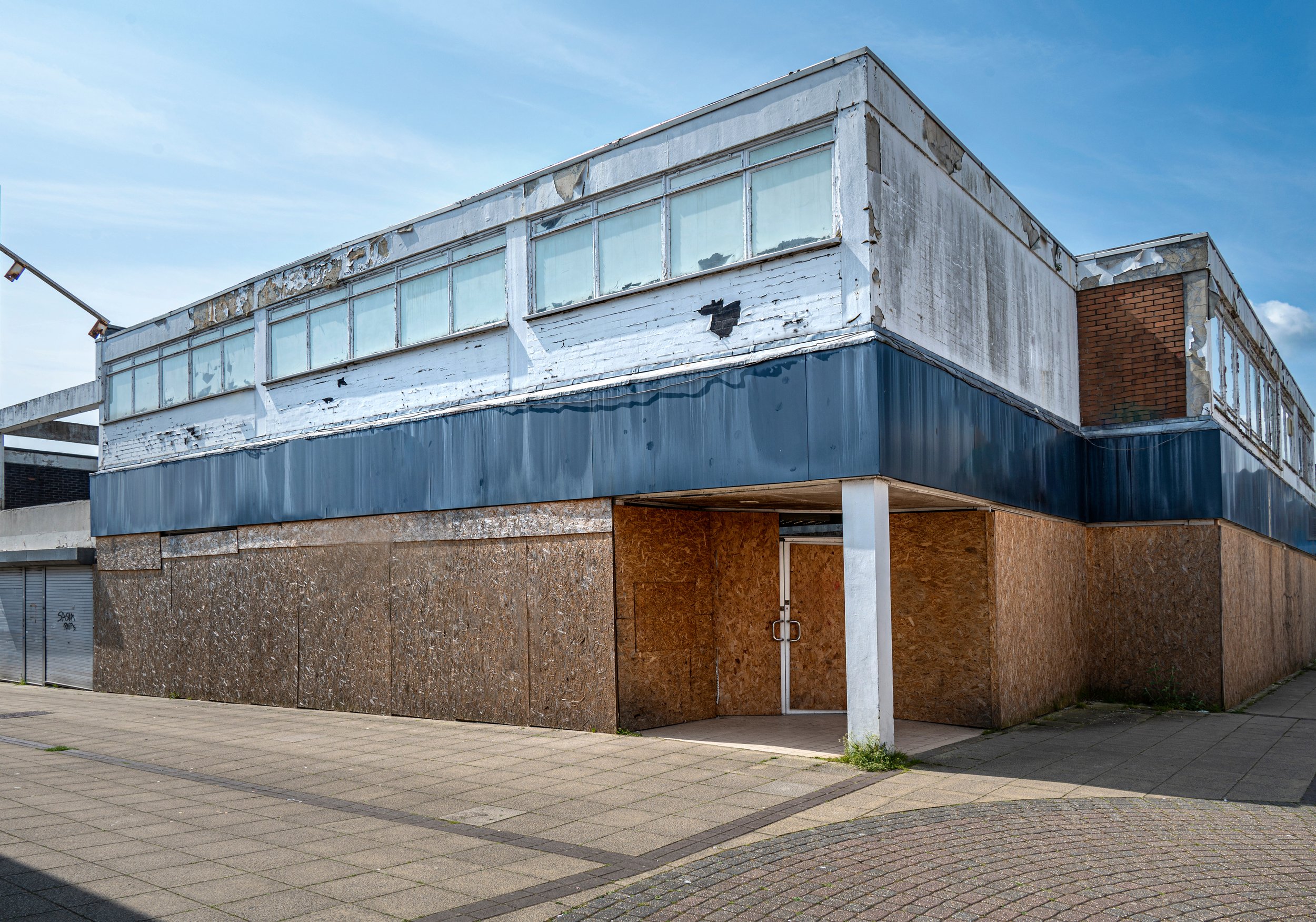
Rundown assets have a wider impact on a town centre than just visual
A vision is not enough
One of the most consistent problems we see is the gap between ambition and delivery. Many councils can articulate what they want in broad terms - a community hub, a workspace, a cultural venue, a revenue-generating space - but lack the detailed commercial work, demand testing and financial modelling needed to move forward.
Without this groundwork, even strong ideas stall. Design teams are briefed without knowing what the building needs to do. Funding bids are submitted without a robust operating model. Conversations with potential operators go nowhere because nobody has defined what success looks like.
Regeneration teams are stretched. Political expectations are high. Public scrutiny is intense. A stranded asset needs more than architectural imagination. It needs someone to define what comes next - commercially, operationally and socially.
Others repair the building. We help define its future.
This is where Next Phase sits. We are not architects. We do not lead with design. We focus on defining the art of the possible before anyone picks up a pencil.
We explore what a building could become in a modern context, not simply what it once was. We test demand rather than assume it. We model viable future uses. We establish delivery structures and long-term operating models. And we do this in a way that supports both the council's objectives and the site's practical constraints.
Our work typically includes:
Generating credible concepts, from familiar options to more creative possibilities
Testing need through engagement, data and market analysis
Building full business models with realistic revenue, cost and subsidy assumptions
Identifying funding routes and supporting bid development
Advising on ownership and operating structures, including CICs, LATCos and hybrid models
Working alongside architects and heritage specialists to develop detailed design briefs and ensure the building is shaped around the use
We work with both heritage and non-heritage assets. The question is not whether a building is listed. The question is whether it can work again - and for whom.
Preparing for what comes next
With Pride in Place, the Heritage Revival Fund and other programmes now taking shape, councils are actively building their project pipelines. Previous funding rounds have shown a clear pattern: the places with well-developed, evidence-led concepts were far more competitive.
Shovel-ready does not always mean detailed design. It means a project with a clear objective, a defined operating model and a credible financial case. Stranded assets rarely win funding on sentiment. They win when councils can demonstrate that the building has a future - and that the concept behind it actually works.
This is precisely the groundwork we provide.

We can work with your design team or create a design team for you
Working with your teams, or assembling the right one
We can slot into existing regeneration or design teams, providing the commercial and operational clarity needed to move a project forward. Equally, we can assemble a wider project group where required, bringing together architects, heritage specialists, operators, and other partners around a shared, deliverable concept.
Our role is not to draw the building. It is to make sure that whatever is drawn has a reason to exist.
The bigger picture
When a stranded asset is given a future, the benefit extends beyond the building itself. It strengthens public confidence. It signals that a place is moving forward. It reduces ongoing liabilities and unlocks investment in surrounding streets.
Stranded assets are not simply problems that need patching. They are opportunities waiting for definition. With the right concept, the right evidence and a clear long-term purpose, even the most difficult sites can become catalysts for renewal.
If you are holding buildings that have slipped out of use or are at risk of doing so, we would welcome a conversation.
Get in touch to discuss how we can help define what comes next.