
Markets: Creating the Future from the Past
Every great town once had a great market. We often talk about high streets being in decline and the rise of online shopping, but the unique appeal of locally sourced produce and the sense of community found in many markets continues to draw both locals and visitors. However, too many towns have lost their markets, or worse, still have them but fail to see their potential.
The National Planning Policy Framework (NPPF) encourages local authorities to “retain and enhance existing markets and, where appropriate, re-introduce or create new ones.” Yet, despite this, markets are still often treated as second-tier retail spaces - undervalued and overlooked.
This is a missed opportunity. At a time when high streets are defined by empty units, fragile retail ecosystems, and waning public trust in regeneration, markets remain one of the few places where genuine renewal still happens. The reality is simple: when councils and landlords invest in markets, they invest in people, places and purpose – and that’s the kind of regeneration that lasts.
In this article, we examine the ways in which markets, often considered to be “the original high streets”, are now becoming the modern driver of change in town centres, whether as catalysts for regeneration, suppliers of measurable social value, models of sustainability or providers of true Pride in Place.
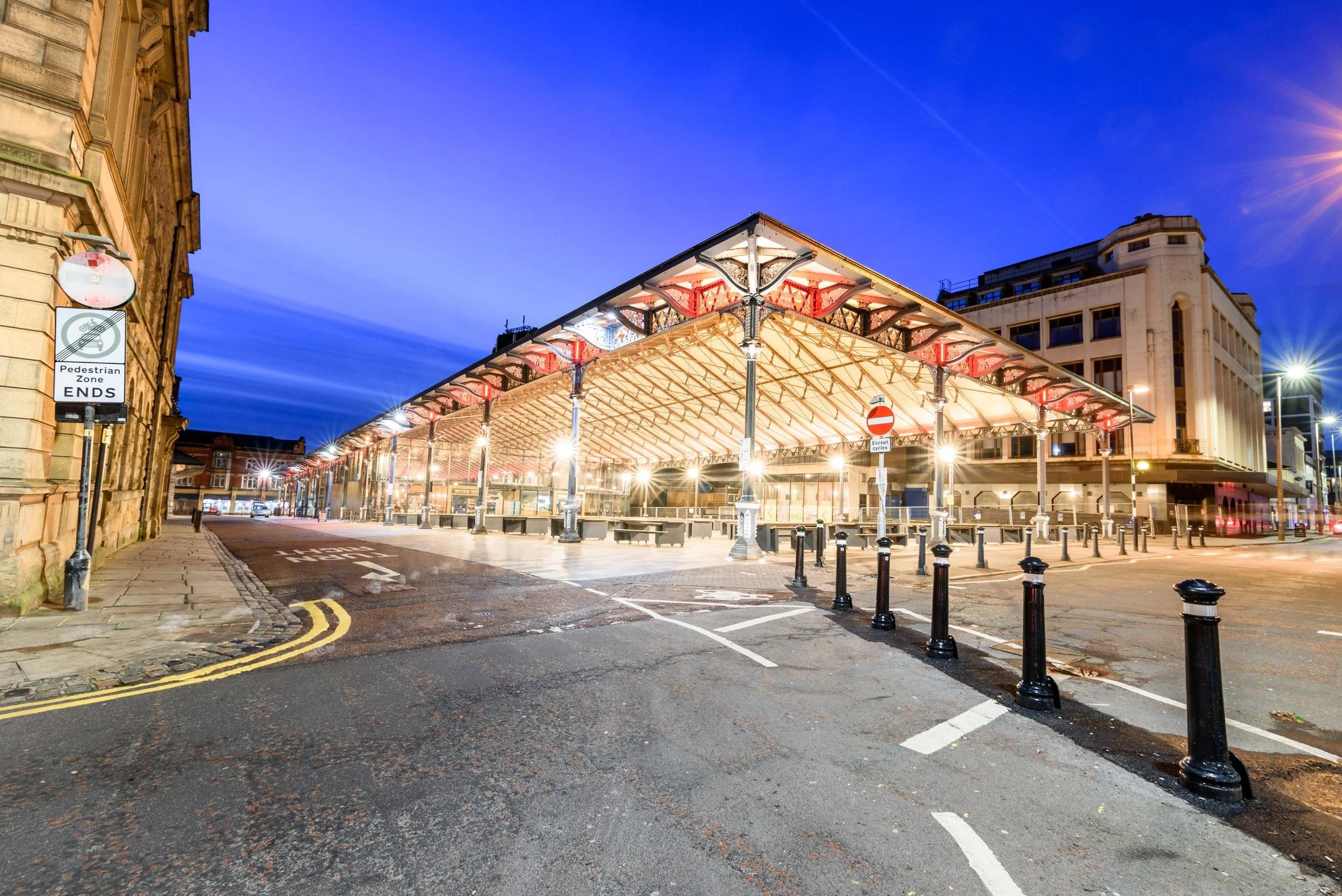
Preston Market Hall
Regeneration: Markets That Make Places
Markets aren’t quaint relics but can be among the most effective, flexible, and community-driven regeneration tools we have. Unlike many regeneration projects that take years to materialise, a market can create change fast. It draws people back into the town centre, provides affordable start-up space, and builds confidence among both residents and investors.
Markets also act as testbeds for new ideas, helping councils and developers understand what kind of uses, design approaches, and trading models work before committing millions in capital. A thriving market sends a signal: this town is back in business.
Many will be familiar with the transformational change brought about by Altrincham Market (for an in-depth interview with its founder Nick Johnson, listen here). But there are other powerful examples around the country, such as:
Crewe Market Hall, Cheshire East
Crewe’s regeneration story has been anchored by the transformation of its historic Market Hall. Following a £3 million refurbishment led by Cheshire East Council, the market reopened in 2021 as a flexible food, retail, and event space that respects the building’s heritage while catering to modern audiences.
Since reopening, the Market Hall has played a major role in reviving Crewe’s town centre. Council data shows a 36 percent increase in overall town centre footfall following the market’s launch, clear evidence of how investment in a single civic building can ripple through the wider economy. The market now attracts visitors throughout the week and into the evening, with live music, community events, and a diverse mix of independent traders contributing to a renewed sense of place.
Crewe Market Hall proves that regeneration doesn’t always require grand masterplans. Modest, well-targeted investment in existing community assets can deliver visible, lasting change, quickly, affordably, and with strong public support.
Ffos Caerffili, South Wales
Ffos Caerffili is a new container market in Caerphilly and the first project to be delivered as part of the town’s ambitious 2035 Placemaking Plan. Since opening in spring 2024, it has helped expand and nurture local businesses by relocating the market to a highly prominent and visible location. It also fosters community engagement, with places to gather overlooking the stunning moat and castle.
The market has already established itself as a destination venue with appearances on the BBC’s Chris Cooks Cymru and Escape to the Country, as well as being named one of the UK’s best food halls by The Sunday Times. It was also Highly Commended at the REVO Gold Awards in January 2025, where it was highlighted as a model for innovative repurposing and placemaking, attracting attention from developers and stakeholders and inspiring continued investment in the area.
These examples show how markets can act as both economic drivers and cultural anchors. When integrated into wider regeneration strategies, they create places people actually want to be, and that’s the most reliable indicator of success.
Social and Community Value: The Human Economy
Markets aren’t just about trading. Recent research shows that markets are more important for social inclusion than parks, libraries or even cafes! When done well, markets build confidence, connection, and belonging - outcomes that no retail park or online platform can replicate. Every community needs places where people cross paths and share space - markets do that naturally. They offer affordable entry points for start-ups, support small-scale entrepreneurship, and give residents daily reasons to come into town. They’re also a social equaliser: somewhere everyone feels comfortable, whether they’re shopping, working, or simply talking to the same trader they’ve known for years.
Although this side of markets is well-known by those who work in and with them, recording and evidencing it is essential to underline their important community role.
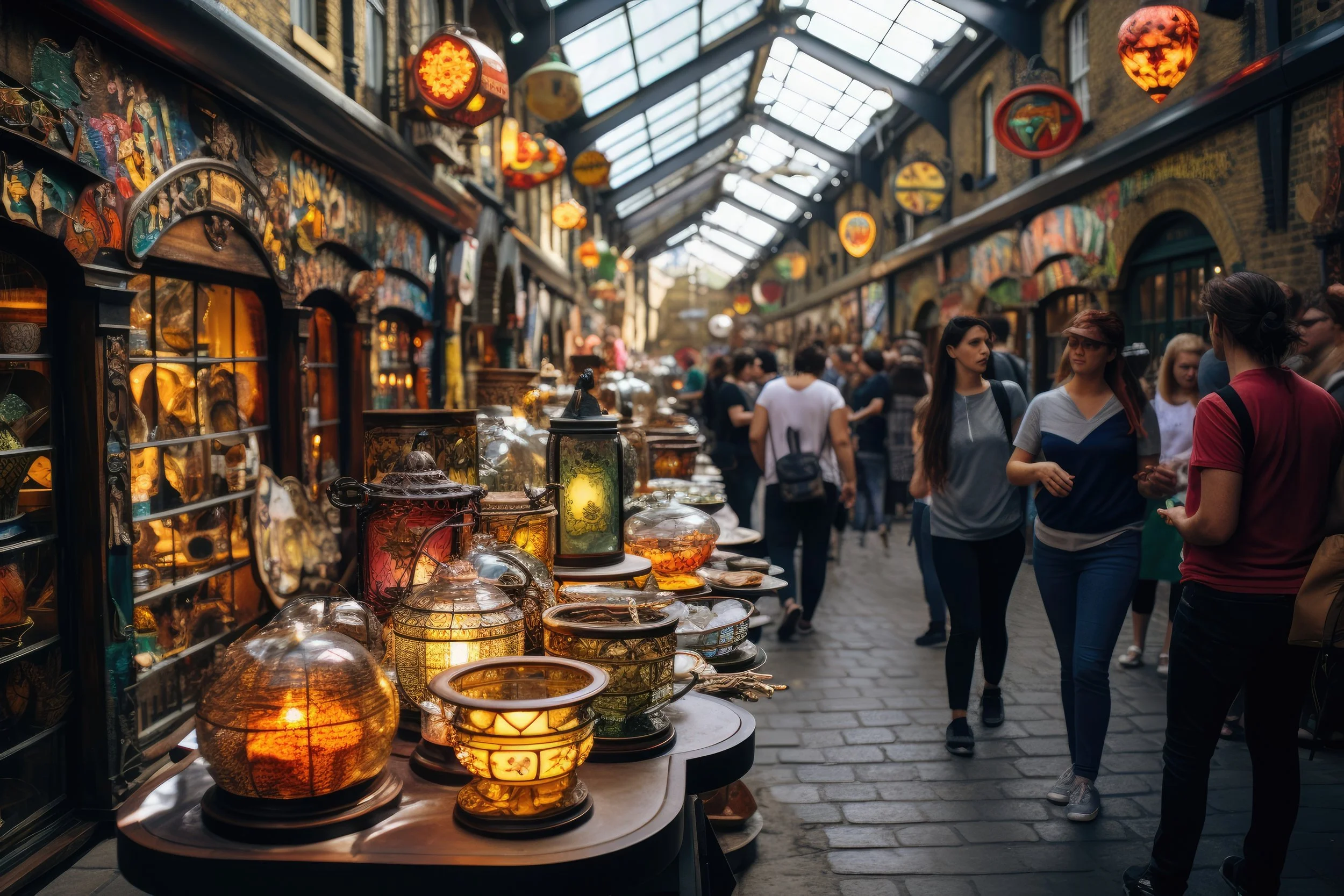
Camden Market
Cambridge City and South Cambridgeshire District Markets
To understand and measure the social value of the markets in Cambridge City and South Cambridgeshire District, consultations were conducted with a variety of stakeholders – including traders, residents, shoppers and other local businesses. The findings evidenced that, as well as jobs and apprenticeship opportunities, the markets provide social interaction and access to local produce and healthy products not available elsewhere. Some relevant quotes:
“The social glue that we create is worth at least three times the money that we make”
“People coming out of their houses to meet and chat in the fresh air… kids trying food they’ve not had before…”
“It’s good for my health, motivating me to cook for myself rather than eat processed food”
“I know the vendors, and it’s nice to have a chat. It’s part of my everyday life”
Grainger Market, Newcastle-upon-Tyne
In 2024, Newcastle University and the UK National Innovation Centre for Ageing opened a new Being Well Place inside Grainger Market, offering hands-on health and wellbeing resources, the latest caring technologies, and fun workshops designed to help everyone live well and age better. It also hosts weekly advice sessions for older people and carers. Grainger Market has also introduced “Slow Shopping” - two hours each week where the music is turned down and the pace slows, providing better conditions for the elderly, dementia patients, and those with sensory sensitivities.
Other examples include Queen’s Market, Newham – a welcoming community asset that provides affordable fresh food, intercultural exchange, and jobs for migrant and low-income communities; and Tŷ Pawb, Wrexham, which provides a space for dialogue around subjects including social and civic issues, the environment, health, cultural identity, sustainability, and education.
Localism is the New Sustainability
If you want to see sustainability in action, look no further than your local market! Markets quietly do what many corporate sustainability strategies only talk about – cutting supply chains, reducing packaging, and keeping money circulating within the local economy.
Research from the University of Leeds and the Institute for Sustainable Food (2024) found that local food systems such as markets can reduce food miles by up to 70 percent compared with conventional supermarket supply chains. These shorter supply chains lower emissions whilst also building resilience by keeping producers and customers connected. The New Economics Foundation has long argued that every pound spent locally is worth roughly twice as much to the economy as the same pound spent in a national chain. Markets make that happen daily.Sustainability isn’t only about materials or energy, it’s about people. Markets support low-barrier entrepreneurship, enabling local producers, makers, and traders to build livelihoods without heavy start-up costs. That keeps wealth local and strengthens community resilience.
If policymakers want to see a practical model of Net Zero in motion, they should start with markets. They already deliver what most sustainability plans only aspire to: minimising transport, encouraging reuse, and sustaining communities.
Borough Market, London
Sustainability is a core part of Borough Market’s business model. The market banned single-use plastic bottles in 2019 and installed free water refill stations across the market. Traders are required to source locally where possible, and surplus food is redistributed daily through the Plan Zheroes charity network. As a result, more than 60 tonnes of food are diverted from landfill every year, feeding communities across the capital and reducing carbon emissions.
Tourism and Experience: Markets Providing Pride of Place
Markets are the original experience economy. Long before the term became a marketing cliché, they were places where shopping met storytelling, and commerce met culture. According to VisitBritain’s Domestic Visitor Survey (2024), almost 70 percent of UK travellers seek “local authenticity” as a key part of their leisure time. In an age where high streets have grown bland and algorithmic, people want places that feel alive, not just functional. Markets deliver that better than any curated retail district or brand-led development. They’re multi-sensory; you hear, smell, and taste the place you’re in.
Some of the most visited destinations in the world are markets, from Istanbul’s Grand Bazaar to the Souks of Marrakesh. Covent Garden Market in London receives ten times more visitors annually than the British Museum! However, these are not just visitor attractions but part of everyday life that visitors want to see. A good market tells you what a place values, who it celebrates, and how it sees itself.
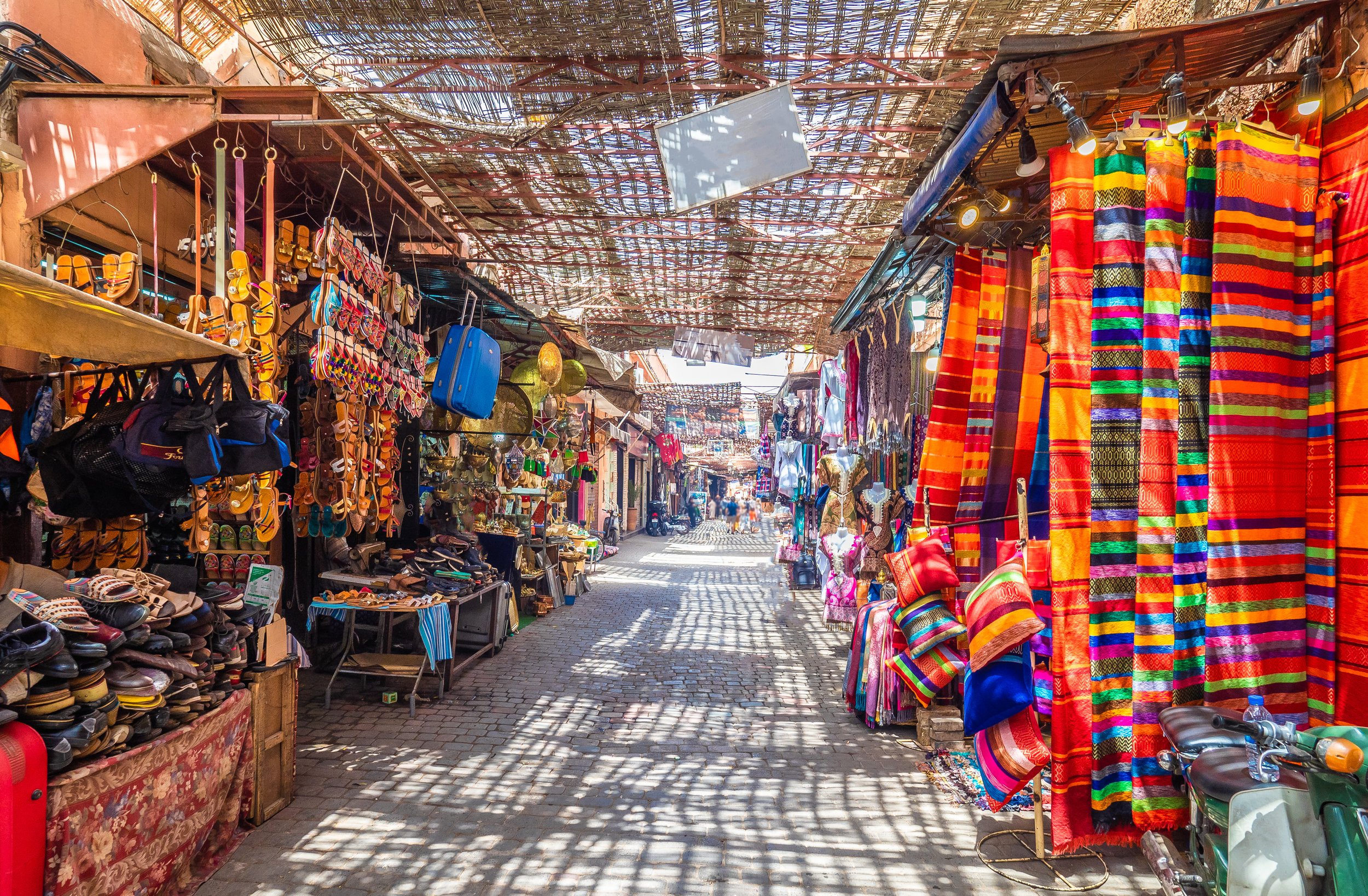
Jamaa el Fna market in old Medina, Marrakesh, Morocco
Ranked number seven in Trip Advisor’s Top 10 English Flea & Street Markets, and one of only two outside of London, Bury Market is praised by visitors for its atmosphere and experience, particularly its “Northern charm”, as well as its distinctive local specialities such as black pudding. Other markets that attract visitors through their history, heritage or sense of “something different” include Bath Guildhall Market, Oxford’s Covered Market and St Nicholas Market in Bristol.
As you can see, we are passionate about markets and the wider social, sustainable, regeneration and place identity role they play. With a combined thirty years’ experience of working in and advising on markets around the country we like to think we know a thing or two about them.
If you’d like to discuss how markets can deliver measurable regeneration, community impact, and sustainability outcomes in your area, we’d be delighted to share our experience.
Esther Worboys, FIPM
Director, Place Partnership
I am an experienced market and placemaking consultant, having successfully advised a large number of clients around the country, including local authorities, institutional investors and private landlords on how to create, develop and regenerate their markets, food halls and town centre spaces, from strategic visioning, through to preparation and implementation of detailed operational and business plans.
Recently I have worked on market projects including Chester Northgate Market, Cheadle and Ellesmere Port Market regeneration, as well as many others. For Cambridge City and South Cambridgeshire District Councils, I led a small team seeking to understand and measure the holistic economic, social and cultural value of traditional retail markets across the area, in order to understand their value, challenges and role within the community, as well as contribution to driving footfall, providing affordable trading space and impact on local sustainability, arts and culture. I have since been retained by Cambridge City Council to work with them on the Civic Quarter Project which includes Market Square.
Hayden Ferriby
Director, Next Phase
Hayden Ferriby is a specialist in markets, food halls and stranded assets, with over two decades of hands-on experience across independent retail, hospitality, and town centre regeneration. A member of the Institute of Place Management, he is recognised for transforming underperforming assets into commercially resilient destinations, drawing on both deep operational experience and a strategic understanding of how traders, communities and local economies connect.
His work spans the full lifecycle of market and asset transformation. Hayden has led major redevelopment and business planning projects for local authorities and private landlords, shaping concepts that deliver strong commercial performance while driving clear social value. His background owning and overseeing some of the UK’s largest market estates gives him practical insight into what makes modern markets, food halls and third spaces succeed in real-world conditions.
He has advised clients across the UK and internationally on repurposing stranded assets, revitalising heritage buildings, and bringing underused spaces back into productive, commercially effective, yet community-led use, with long-term financial sustainability at the core.